
It is January 2026, and hopefully, you have applied for a free boiler grant. If yes, that’s a brilliant approach! Today. I am going to tell you one more secret that nobody told you yet.
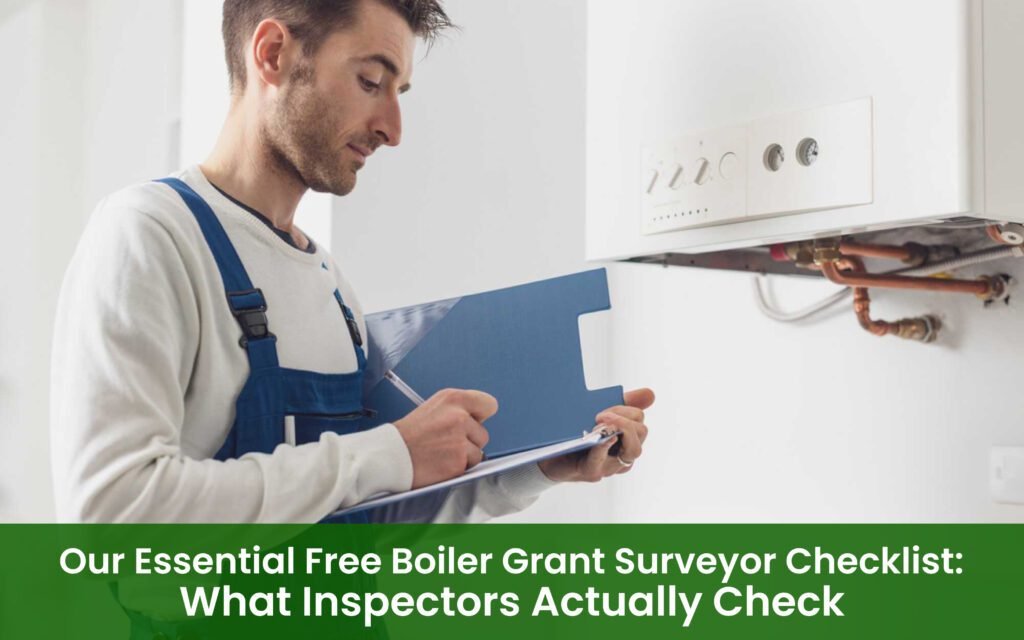
Before installing anything, a surveyor needs to pop round your house. They look around, check a few things, and decide if your home is ready for a new boiler or not. Sounds simple, right? Well, it is. But only if you know what they are actually looking for. This Blog post is all about the Free Boiler Grant Surveyor Checklist. You can understand this concept better.
What’s This ECO4 Survey All About?
Think of it like an MOT for your home’s heating potential. The aim is to provide perfect heating solutions to the homeowners. The UK government wants to deliver the right thing to the right people.
These surveyors are not trying to catch you out. They are just checking that your property can handle a modern boiler safely. Different homes need different approaches. As we know, new homes have different infrastructure and installation requirements compared with old ones.
This surveyor evaluation process mostly takes one to two hours. And in some cases, maybe less if everything looks straightforward.
Five Critical Things Surveyors Actually Check
Now, let’s break down what happens during these official team visits. No jargon. Just the real stuff.
1. Your Current Heating Setup Gets a Once-Over
Your existing boiler and radiators: They want to see what you are working with now. Is it ancient? Barely functioning? Hidden behind a fireplace?
Here’s what catches their attention:
- If you have old combi boilers, they are straightforward to replace.
- They also check whether the regular boilers have separate tanks or not.
- Or whether the back boilers properly ventilate in chimneys that require extra work.
Your radiators matter too. Cold patches mean there’s sludge inside. Rust spots suggest the system hasn’t been maintained well. These things don’t automatically disqualify you. But surveyors make notes about them.
Sometimes they will recommend a power flush first. Other times, you might need one or two radiators swapped out.
Nobody expects perfection. They just need to know what state things are in.
2. Pipes and Drainage Cause More Headaches Than You Would Think
There’s always a debate over this thing, and it continues.
Modern boilers produce something called condensate. It’s basically acidic water that needs draining away properly. No way around it.
The Surveyor Checks Three Main Things Here
- Your gas pipes might be too narrow for newer boilers. They measure the diameter and distance from your meter. Older homes often have 15mm pipes when 22mm works better.
- Condensate pipe access becomes the real sticking point. The surveyor needs to find a route from your new boiler to a drain. Could be outside. Might be an internal waste pipe.
- If they find no good route, they suggest alternatives. Maybe a condensate pump. Possibly relocating the boiler slightly.
- Water pressure gets tested, too. Stick a gauge on your tap, check the reading. Combi boilers especially need decent pressure to work properly.
Low pressure is not a deal-breaker necessarily. Just means you might need a different boiler type.
3. Boiler Installation Flue Requirements UK Rules Are Surprisingly Strict
- Safety regulations: You don’t mess about: Every boiler needs a flue. That flu must follow very specific rules about where it can and cannot go.
- Surveyors measure everything precisely: Distance from windows? Regulated. Space from doors? Regulated. How close to your neighbor’s boundary? You guessed it. Regulated.
Horizontal fluesneed different clearances than vertical ones. They check inside and outside of your home. Listed buildings face extra complications. Conservation areas, too. The surveyor knows these restrictions and works within them.
What is the Flue Route Itself
- Getting from the boiler to the outside sounds simple until you consider what is in the way. Whether they are existing pipes, joists, electrical cables, or wall cavities that are not deep enough.
- Surveyors figure out the cleanest route that keeps everyone legal and safe.
- Cupboard installations need ventilation. The surveyor calculates exact air gap requirements based on your new boiler’s specifications. Too little ventilation? They’ll specify what modifications you need.
4. Electrical Bits Matter More Than You Would Expect
- Gas boiler: They still need electricity. Controls, pumps, and ignition systems – all run on electricity. The surveyor checks that your consumer unit has space for the necessary circuits.
- Really old properties sometimes have outdated wiring. That might need addressing before installation happens.
Smart Controls Are Part of the Package Now
Where should the thermostat go? Central hallways usually work best. Not near radiators. Not by external doors. Somewhere that actually reflects your home’s overall temperature.
The surveyor identifies the ideal spot and checks if wiring can reach there sensibly.
5. Can They Actually Get Everything Inside Your House?
Sounds obvious, but you’d be surprised. New boilers come in big boxes. Those boxes need to travel from the van to wherever the boiler’s going.
The Surveyor Walks the Route – Your Complete Home Tour
- They check the narrow hallways and ight corners on the stairs. Deeply examine the doorways that might be too small. They noted down everything.
- Sometimes, equipment needs to be hoisted through windows. Occasionally, bigger units need partial disassembly to fit through restricted spaces.
- Once inside, installers need room to work. Building regulations specify minimum clearances around boilers for future servicing.
- Cramped spaces make installation difficult and future maintenance awkward. The surveyor ensures that adequate working room exists.
What Happens When Problems Pop Up?
According to the UK Home Survey results, they identify at least one minor issue. That’s totally normal.
Common Issues They Found
- Radiators: They found that radiators do not cope with lower temperature systems. Modern condensing boilers run cooler than old ones. You might need bigger radiators in the main rooms.
- Drainage challenges: They also found drainage challenges in properties without convenient waste pipe access. But its solution also exists. They just need planning.
- Flue complications: When the initial boiler placement ideas do not meet regulations. The surveyor suggests alternative positions.
None of these things typically stops your installation. They mean more planning beforehand.
Getting Ready for Your Surveyor’s Visit
- Make life easier for everyone: Give clear access to your current boiler. Move boxes, vacuum cleaners, whatever’s in the way. Make sure the path is clear and easy to walk on.
- Clear the Flue Routes: Ensure your loft hatch opens easily if you have one. Surveyors sometimes need to check potential flue routes up there.
- Check It Yourself First: If you notice any unusual noises or temperature issues, check them yourself first. Write down any concerns about your current system. Rooms that never heat properly and anything else. Share these details with the surveyor.
The more information they have, the better they can plan.
Ask These Questions During the Surveyor’s Visits
- What concerns do they see?
- How easily can these be fixed?
- What’s a realistic timeline?
Good surveyors explain findings clearly. If something’s unclear, speak up. This affects your home. You deserve to understand completely.
After They Leave: Understanding Your Report
After a detailed evaluation, you will receive written findings within a few days, usually. This document outlines everything checked, any issues identified, and recommended solutions. Read it carefully.
- Some points might be essential before installation proceeds. Others could be optional improvements.
- Your scheme coordinator helps you understand what’s required versus what’s suggested. Not everything necessarily falls under the ECO4 scheme coverage.
- Knowing what you might need to arrange separately prevents budget surprises later.
Why This Actually Matters
Getting this survey right the first time saves massive headaches.
Failed surveys mean delays. Delays mean staying cold longer. Nobody wants that, especially heading into winter.
Understanding what surveyors check lets you spot potential problems beforehand. Maybe that pile of stuff blocking your boiler cupboard should be moved. Perhaps mentioning your water pressure upfront helps.
Small preparation steps smooth the whole process considerably.
Conclusion
ECO4 boiler surveys are not just designed to catch people out. They exist to ensure installations happen safely, legally, and effectively. Surveyors want your installation to succeed just as much as you do.
Use this Free Boiler Grant Surveyor Checklist to prepare properly. Address obvious obstacles beforehand. Engage openly with the surveyor when they visit.
Most surveys go smoothly. The ones that don’t usually involve simple fixes are identified early. Your path to a warm, efficient home doesn’t need to be complicated. A bit of preparation and understanding makes everything flow naturally.
A new boiler represents a real improvement to your daily comfort. Make sure nothing silly delays you from getting it. The surveyor’s visit is just one step, certainly. But just one step on the journey to better heating.
Handle it right, and you’ll be enjoying that lovely new, efficient boiler before you know it.